
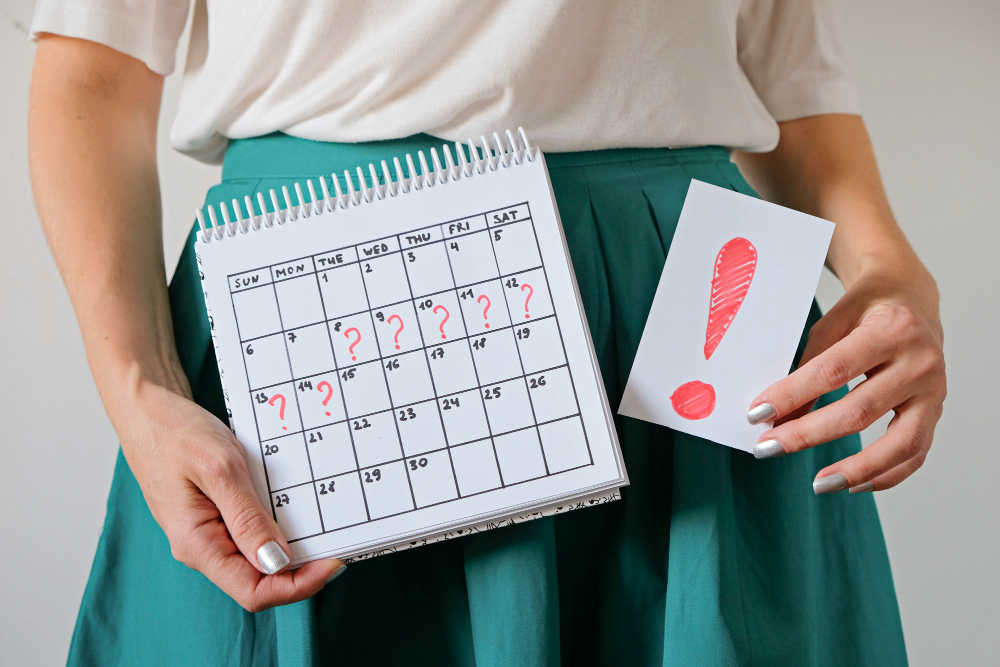
What Are Irregular Periods?
Irregular periods are when your menstrual cycle does not follow a steady pattern. Usually, a normal menstrual cycle lasts between 21 and 35 days. However, some people may notice their periods come too early, too late, or even skip a month. For example, if your period comes more than a week early or late each month, it is considered irregular. In addition, heavy bleeding, very light bleeding, or missed periods can also be signs of menstrual cycle irregularities. While many people think of PCOS as a cause, there are other reasons for irregular periods.
Common Causes of Irregular Periods (Excluding PCOS)
Many factors can cause irregular periods. Although PCOS is well known, several other health issues and lifestyle choices can play a role. Below are some common causes of irregular periods:
How Are Irregular Periods Diagnosed?
Doctors use several steps to find the causes of irregular periods. First, they will ask about your medical history and your menstrual cycle. For example, you may need to track your periods for a few months. Next, a physical exam is done to check for any signs of illness. Often, doctors order blood tests to look for hormonal imbalance or thyroid problems. Sometimes, they may suggest an ultrasound to check your ovaries and uterus. In some cases, more tests are needed if a chronic illness is suspected. Because many things can affect your cycle, it is important to share all symptoms with your doctor.
Treatment Options for Irregular Periods
Treating irregular periods depends on the cause. For many, simple lifestyle changes can help. For example, managing stress, eating a balanced diet, and keeping a healthy weight may improve your cycle. If a thyroid disorder or another illness is found, treating that condition often helps. Sometimes, doctors may suggest hormonal medications to regulate periods. However, not everyone needs medicine. In some cases, changing or stopping certain medications may help. If you have heavy bleeding, severe pain, or missed periods for several months, you should see a doctor. Early care can help prevent long-term problems.
Prevention and Self-Care Tips
There are steps you can take to help keep your menstrual cycle regular. While not all causes can be prevented, healthy habits make a difference. Try these self-care tips:
By following these tips, you can support your body and help prevent menstrual cycle irregularities.
Book your appointment today for expert care and guidance with Dr. Lily.